Design - Teucrium
Teucrium: Weed of the Mediterranean? - March 2026
Tree Germander (Teucrium fruticans) has got a bad press. Often referred to as the ‘Weed of the Mediterranean’, gardeners here tend to be dismissive of its virtues - in fact rather snobby about it. People tell me that ‘it takes over’ or that it is ‘common’. Well maybe if you don’t treat it right then it can be, but for me Teucrium fruticans is an unbeatable backbone to my garden and I don’t know how I would fill the space and get that ‘Mediterranean feel’ without it.
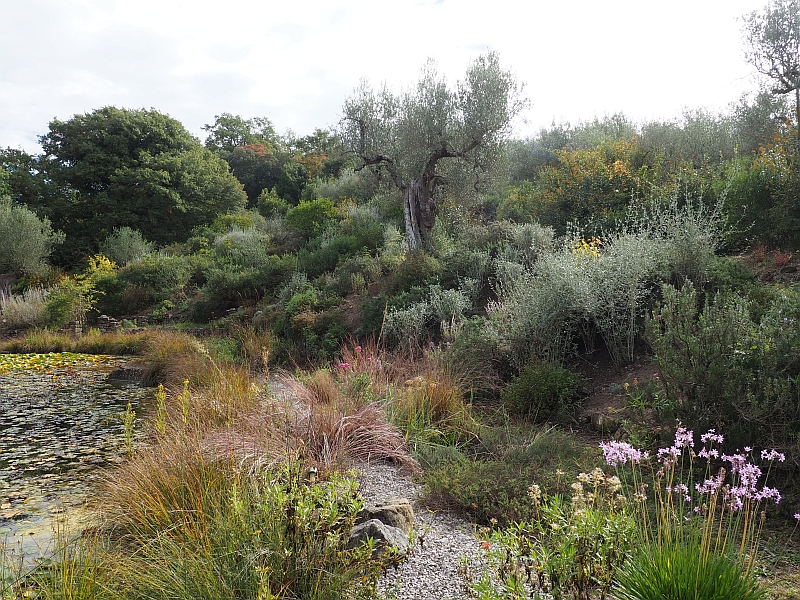
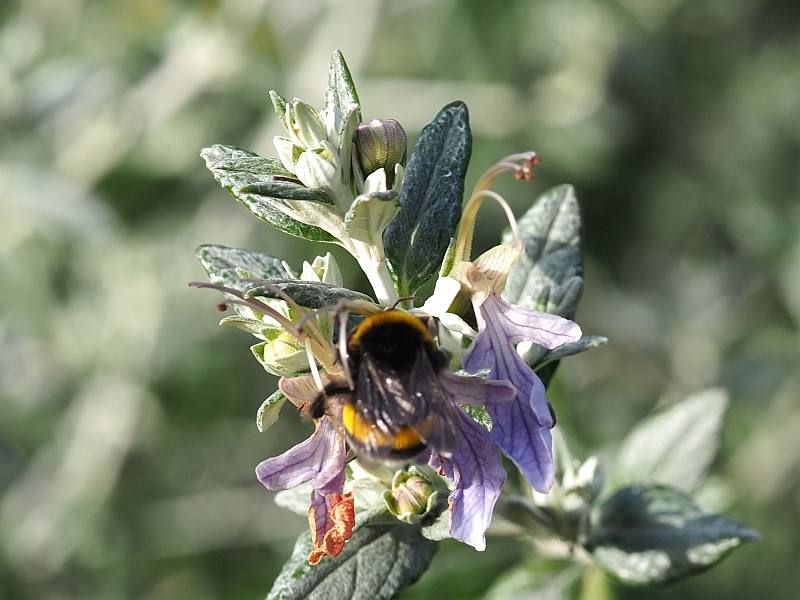
Many gardeners like to try and tame Teucrium fruticans by clipping it hard to create topiary balls, which is fine if that Is what pleases them, but I prefer to let it grow more naturally with a softer profile and encourage it to bloom as much as possible. The flowers are a somewhat pallid lavender-blue but they arrive during the winter and are ready and waiting to welcome early insects, especially bumblebees. If you take a close look, the flowers are rather elegant and complex, if washed out in colour.
The plant is virtually indestructible in our climate, and I cannot fault it for that, but if you let it go untended it can get to about 2m tall and at least that wide, so a trim in autumn and removal of dead wood is recommended.
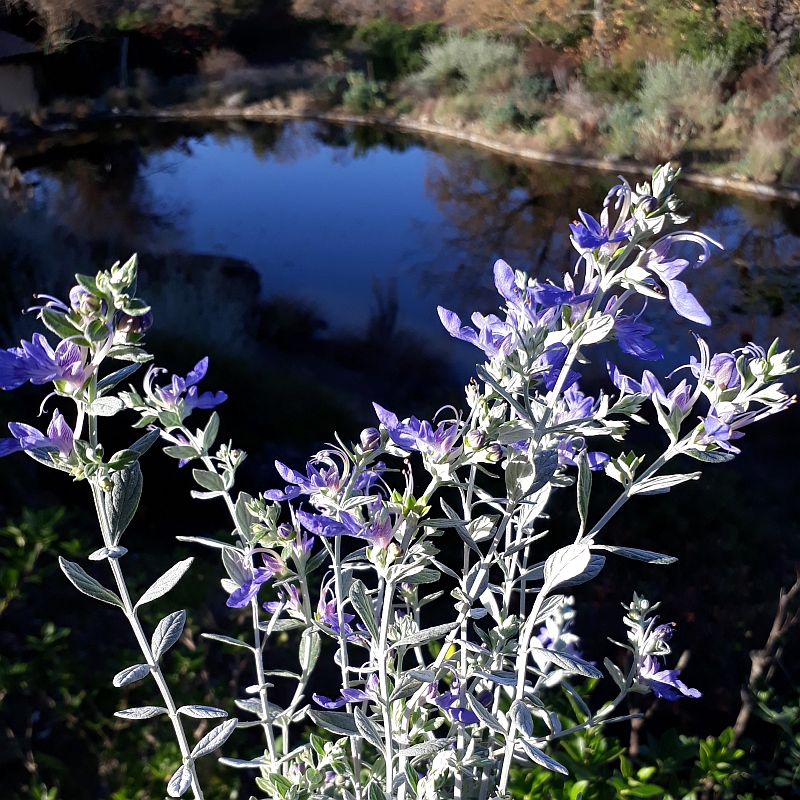
If you would like a more sophisticated alternative to this messy grey plant, then the named variety ‘Azureum’ might be for you. It is also native to the Mediterranean but less vigorous and more susceptible to cold temperatures. The main attraction though is the intense blue of the flowers – which are the same as the basic Teucrium fruticans in all other respects. Sardinian garden designer Maurizio Usai has developed a hybrid of ‘Azureum’ with the ordinary Teucrium which combines strong colour of the flowers with robust growth – the hybrid is sometimes referred to ‘Pietra Rossa’ after his garden. Another deep blue variety is 'Ouarzazate' but I think it would be too sensitive to cold for us to grow here.
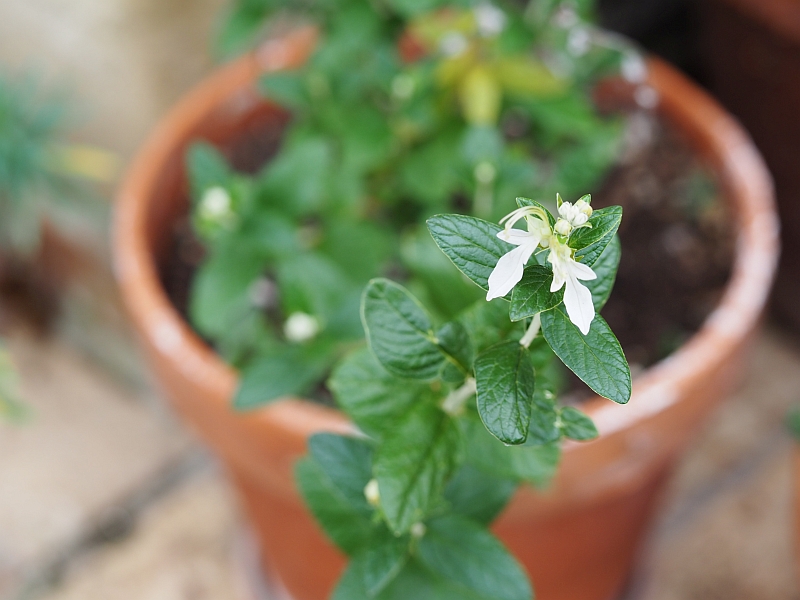
Something of a novelty – and not everyone’s cup of tea – is the white flowered variety 'Gibraltar'. The plant has broader leaves of a dark shade of green which show off the white blooms (the basic Teucrium has narrow grey leaves). This variety is supposed to be a quick grower but I find that it takes a while to establish before really getting going in the second year.
Some much for the Weed of the Mediterranean. But this is not the whole story. There are many other plants in the Teucrium family which are native to the Mediterranean basin (and beyond) which are evergreen perennials but have a variety of colours, bloom times and heights which are useful and decorative in many garden situations. And I would not classify any of them a ‘Weeds’.
Low growing Teucrium for the gravel garden and ground cover:
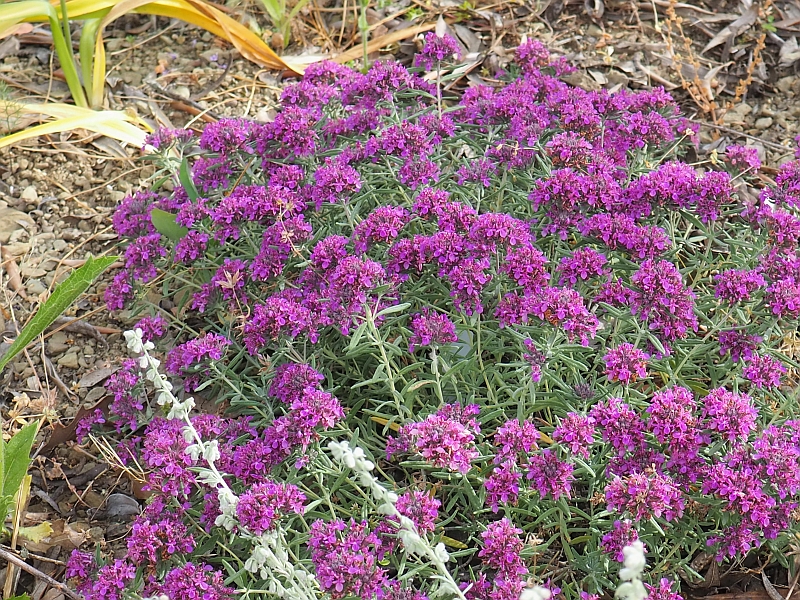
Teucrium ackermanii is low growing (around 10cm) and gradually forms a spreading mat. The flowers are a rich pink-purple and arrive in June. It is very tolerant to drought.
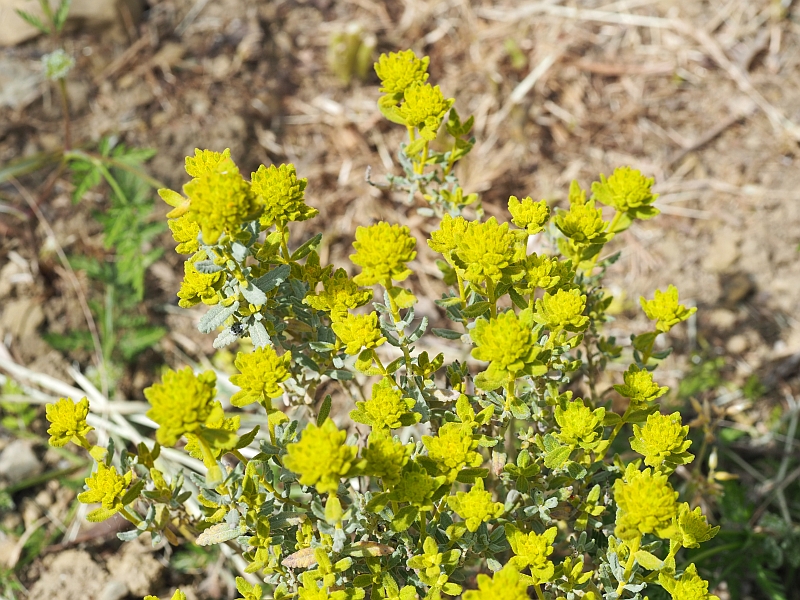
This low growing teucrium has surprisingly bright acid yellow flowers which form a small cushion. Originating from Southern Spain, Teucrium luteum is a highly drought-tolerant plant.
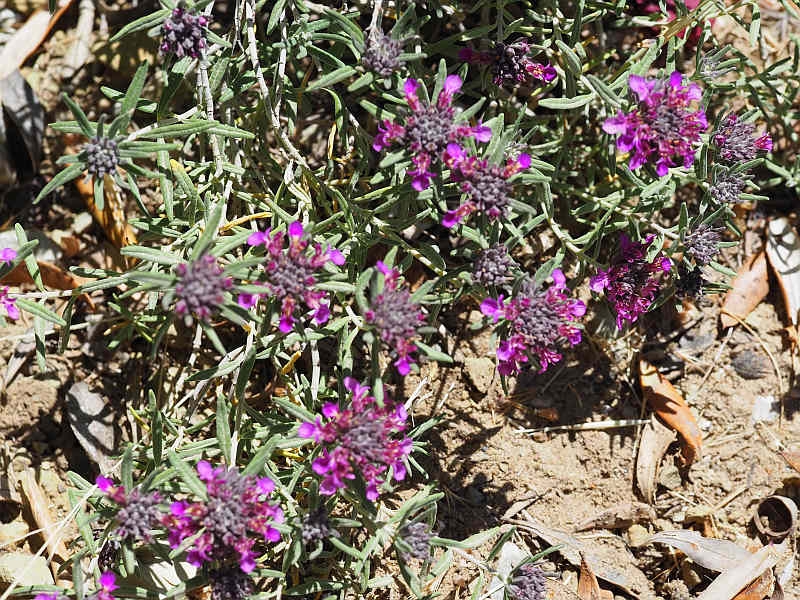
A little taller than T. ackermanii, this plant has more feathery foliage and forms a small cushion. Teucrium cossonii is very useful in paving planting or filling gaps in the border.
I have tried to grow Teucrium subspinosum which is a very tiny variety from the Balearics but I think my soil is too heavy for it to cope with. I am currently trialling some Teucrium polium which are supposed to be low growing ground cover with pale pink or white flowers - let’s see how that goes.
Medium height Teucrium for the borders and path edging:
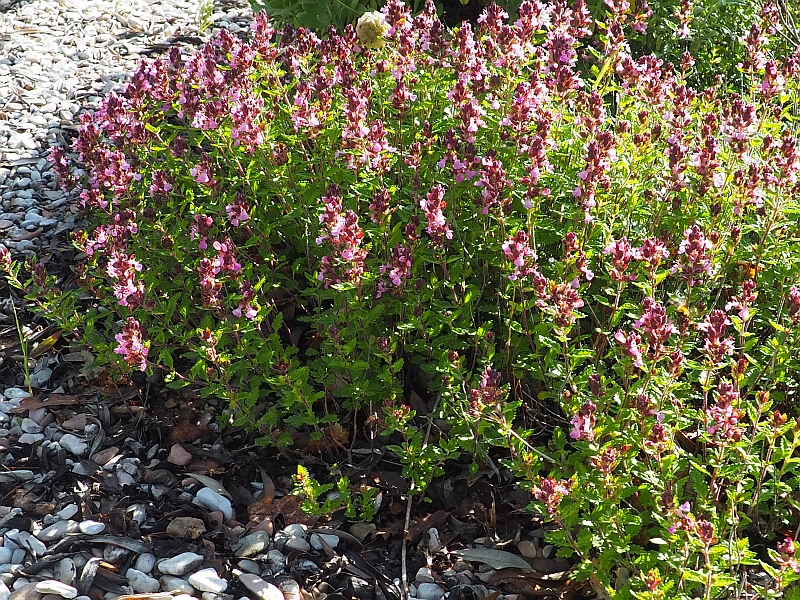
Common name ‘Wall Germander’, Teucrium chamaedrys is a useful plant for edging pathways as it forms a spreading mat. Blooming in June, the pink flowers are not very showy but the dark green foliage is attractive. It can get a bit messy so best to give it a trim in autumn. Similar is Teucrium divaricatum which carries its flowers above the leaves and is a stronger shade of pink. There is also a useful hybrid form Teucrium x lucidrys which grows a little taller and does not have the crinkly edges to the leaves but is a strong plant for the mixed Mediterranean border.
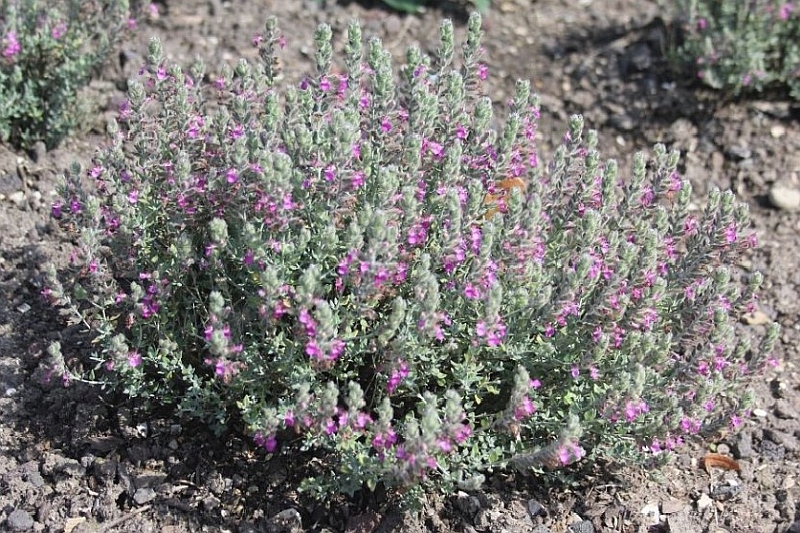
Although it grows to medium height, Teucrium marum never seems to bulk up - at least not with me - so you need to plant quite a few to get an ‘effect’. But it is a pleasing combination of pink and silver which is easy to accommodate in the dry garden and flowers later in the season.
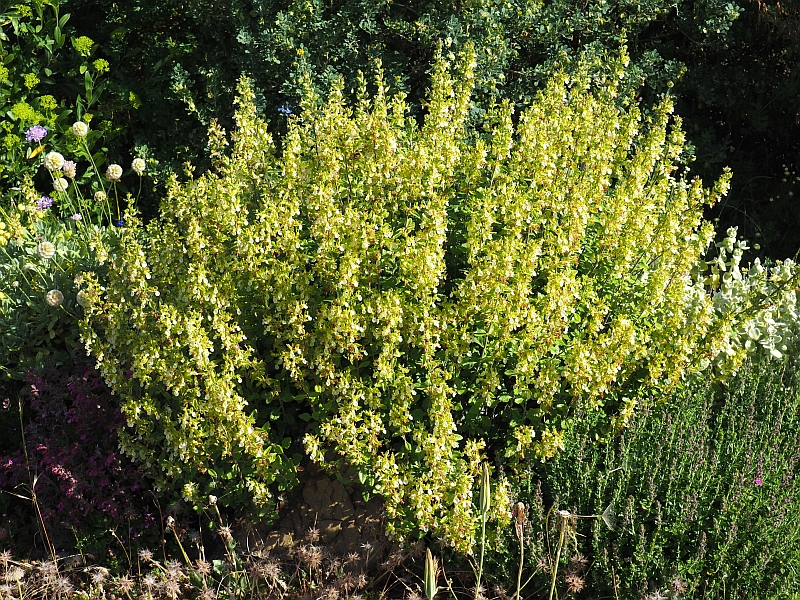
This is a slightly taller plant and its pale yellow flowers set seed very easily so once acquired you need never be without it. Teucrium flavum has broader dark green leaves and will form a small shrub if kept neat with trimming back in autumn. It can succeed in the most unlikely places, including shade under trees, and tolerates cold as well as drought.
And finally an oddity:
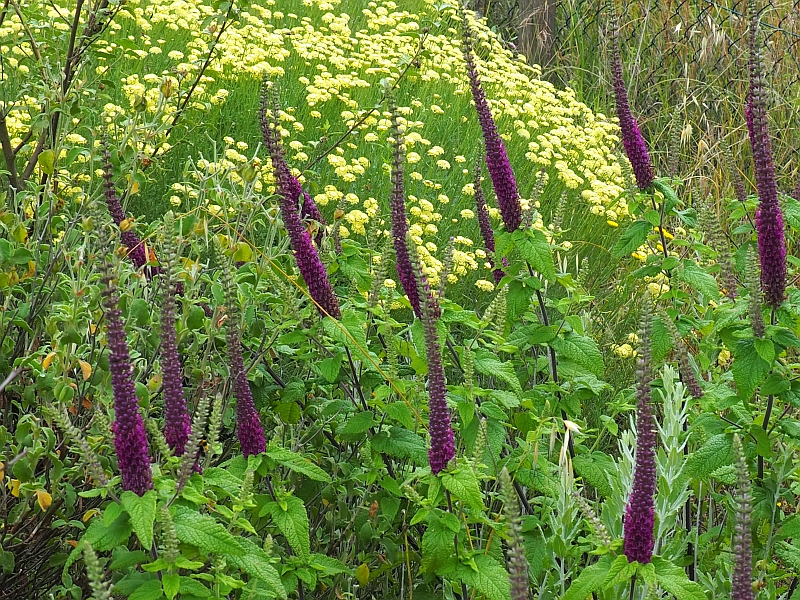
If you didn’t know that this was a teucrium then I don’t think you would guess. The leaves are much larger and lighter shade of green than most other teucrium; the flowers form as a tall spikes of deep purple held high above the foliage. It seeds widely and forms clumps around the garden if you let it. Growing to around 60cm tall and tolerant of winter cold, this is a showy plant that will lift a planting design even if it is not quite as resistant to drought as other Teucrium. Apparently, this variety is originally from the Caucasus rather than the Mediterranean, so perhaps that explains why it is so exotic.
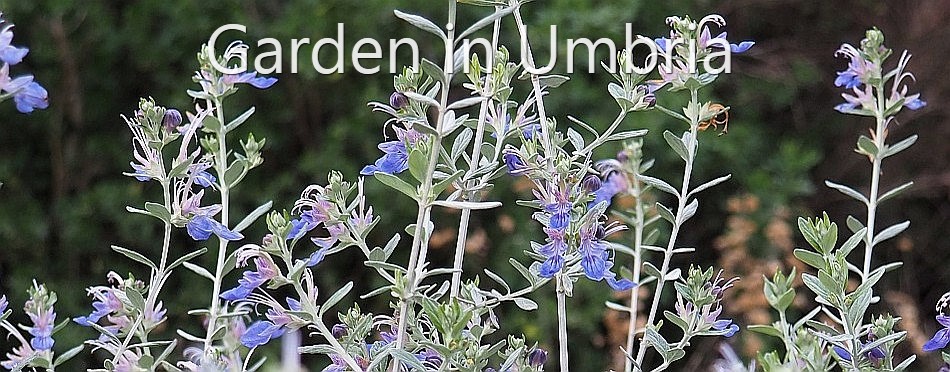
The photo at the top of this page shows Teucrium fruticans ‘Azureum’ blooming in January
Many of these articles first appeared in the Castiglione del Lago monthly newsletter “Qua e là” edited by Priscilla Worsley
All text and photographs © Yvonne Barton unless stated otherwise