Design - Cistus - doing it for themselves? - May 2026
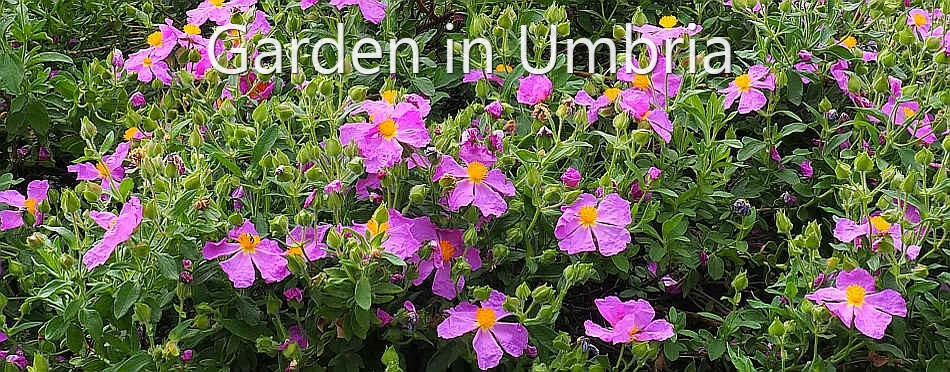
At the moment the roadsides are sparkling with pink and white flowers growing wild bordering the woodland. These wild species of Cistus are white Cistus salvifolius, which arrives early, and pink Cistus albidus a little later. They form the basis of many varieties we cultivate in our gardens, but even the pure species are attractive and useful.
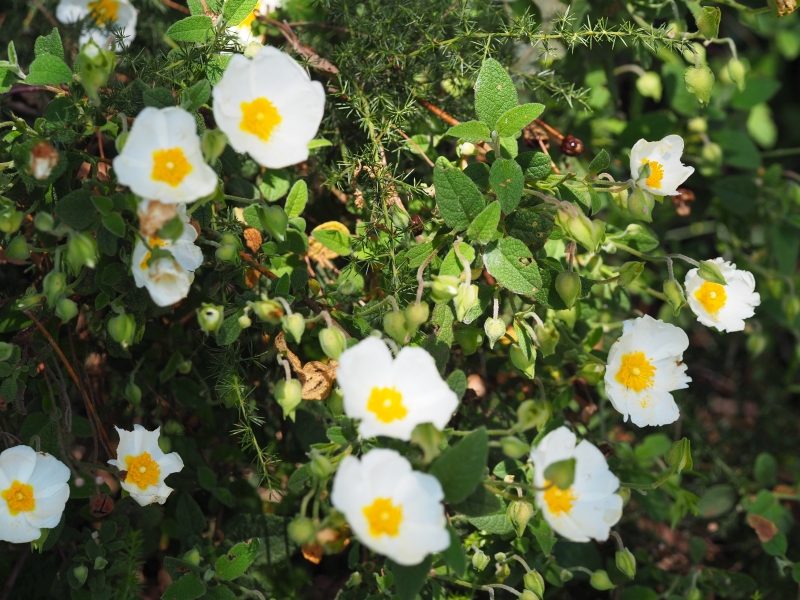
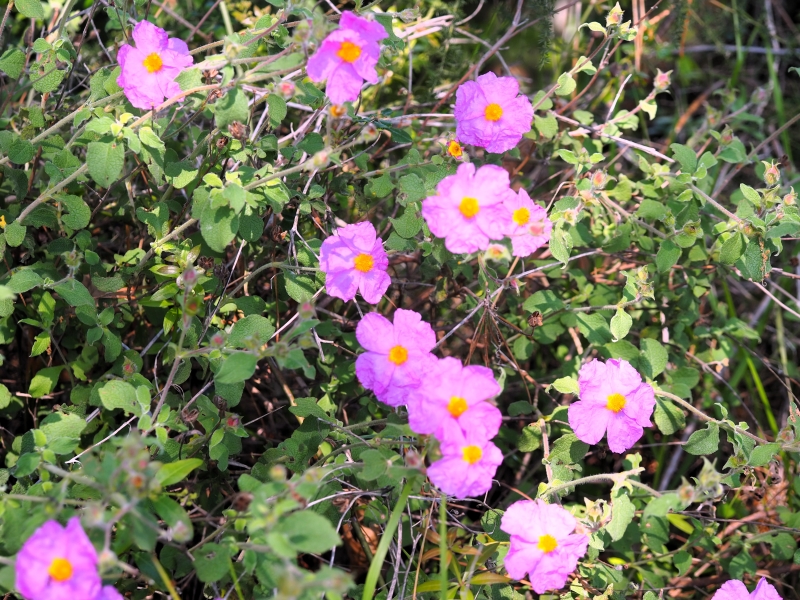
Cistus albidus in the wild
But despite the attractiveness of this indigenous plant, it gets overlooked by the local populus. Why? Perhaps because it does appear of its own accord and needs no assistance to be so decorative. With this in mind, I think we should celebrate the Cistus with a musical offering. How about ‘Sisters’ from Irving Berlin's ‘White Christmas’ (1954)? (Cistus/Sisters geddit?!). Or perhaps they deserve something that reflects their independence and resilience. How about ‘Sisters Are Doin' It for Themselves’by the Eurythmics with Aretha Franklin (1985).
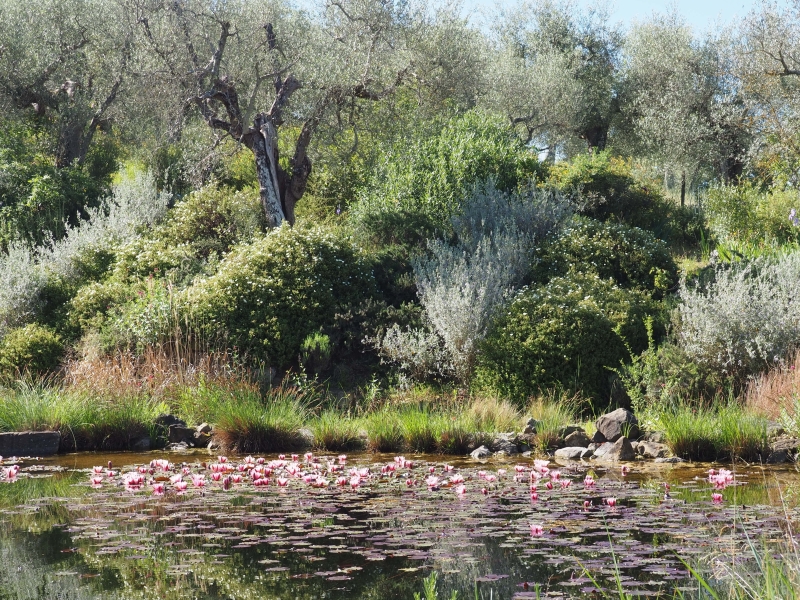
I use the cultivated forms of these two wild cistus (i.e. plants I bought from a vivaio) in large plantings across the garden. Being species, they self-seed freely and are ephemeral so the plants seem to move about – impossible, I know, but in keeping with Professor Stefano Mancuso’s thesis of plants that can travel L'incredibile viaggio delle piante. So I have found that the pathways through the garden have changed route – entirely due to the plants’ whims.
Several useful hybrids are based on these two wild species.
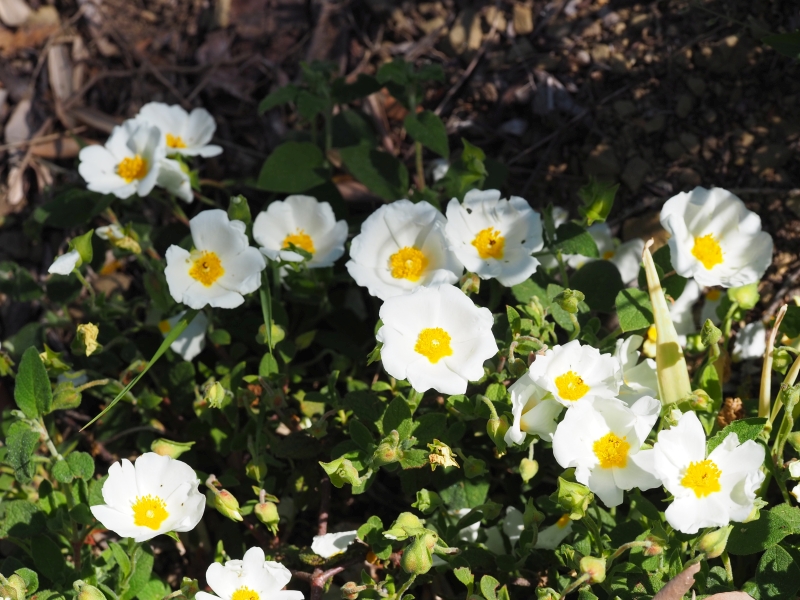
Less fickle and with more dense, dark foliage than Cistus salvifolius, this hybrid is a useful mainstay in my garden. It reaches about 1m tall or less.
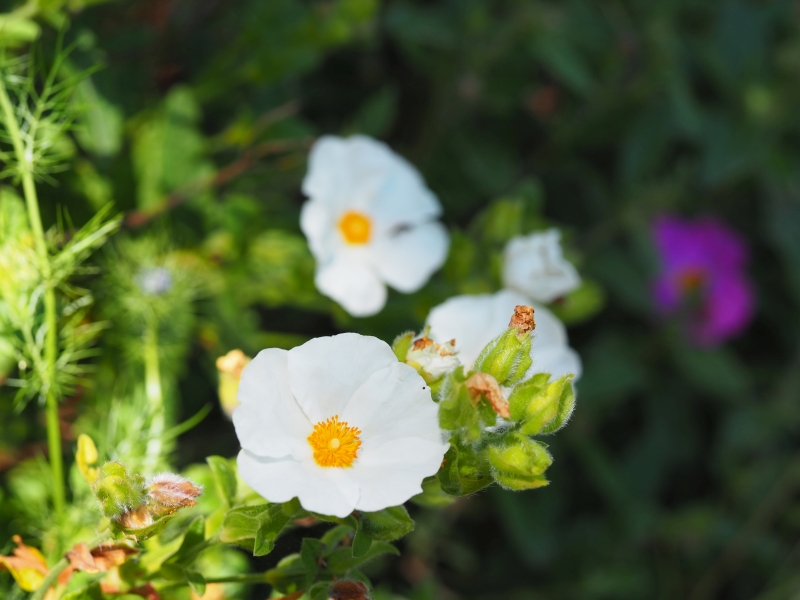
Lighter coloured, broader leaves of C. var. corbariensis is relatively new to me but has already shown itself to be a prolific bloomer. It is mid height between C. salvifolius and C. x florentinus.
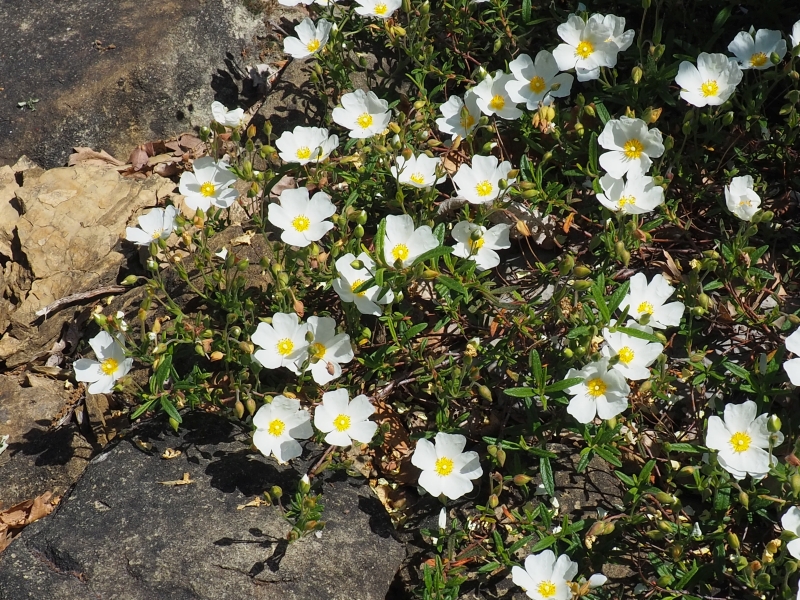
A low growing, narrow leaved cistus that is useful for edging or between paving stones, the hybrid Cistus x pauranthus 'Natacha' reaches no more than 40cm and can be damaged by cold winter weather, especially if the soil is wet.
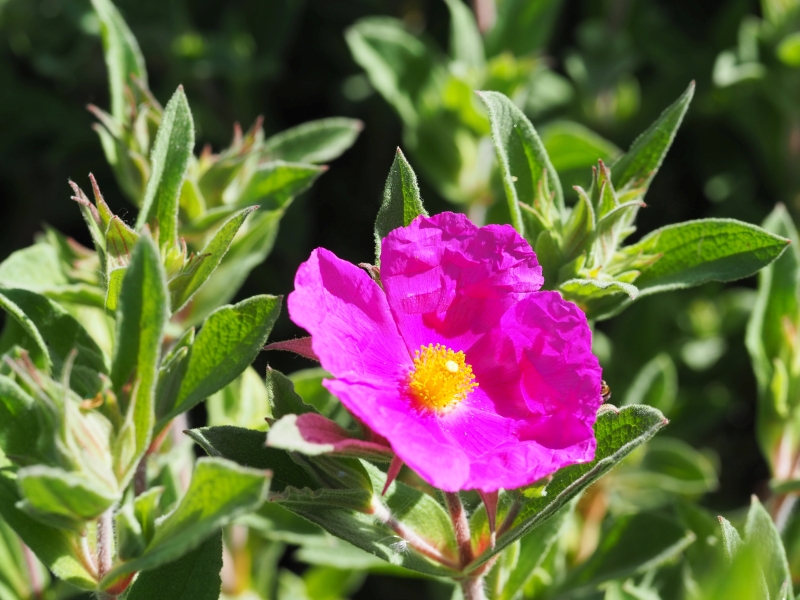
A hybrid of Cistus albidus, Cistus x pulverulentus is a useful plant for ground cover as it only gets to about 60cm tall but spreads to 1.5m (or more) wide. The intense pink flowers are attractive against the pale silvery foliage.
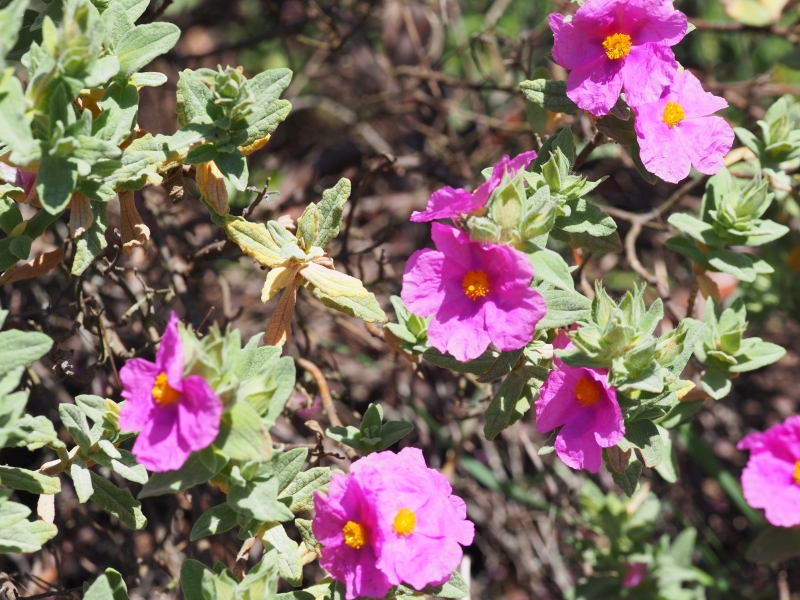
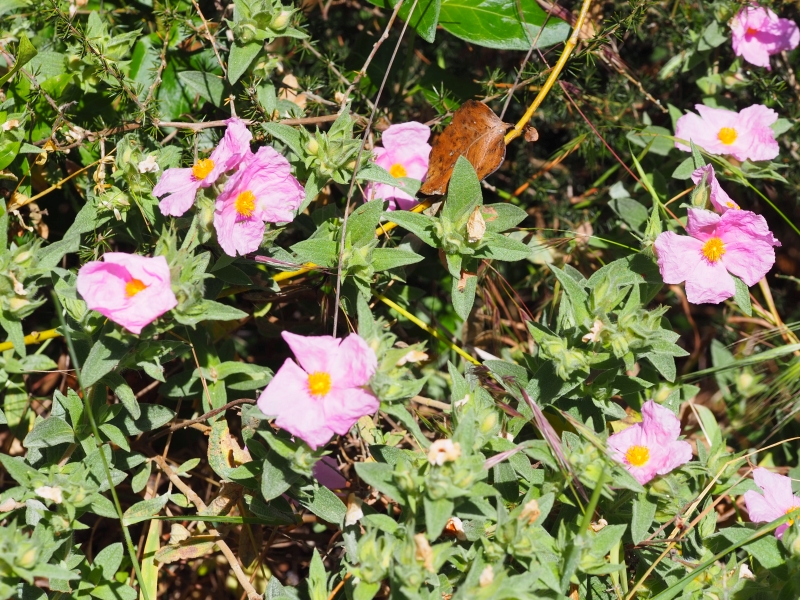
More hybrids of Cistus albidus, the ‘Delilei’ types are a little taller (about 1m) and more regular, dome shaped. The deep pink ‘Deborah’ and paler pink ‘Fiona’ are both good named varieties, resistant to drought and cold.
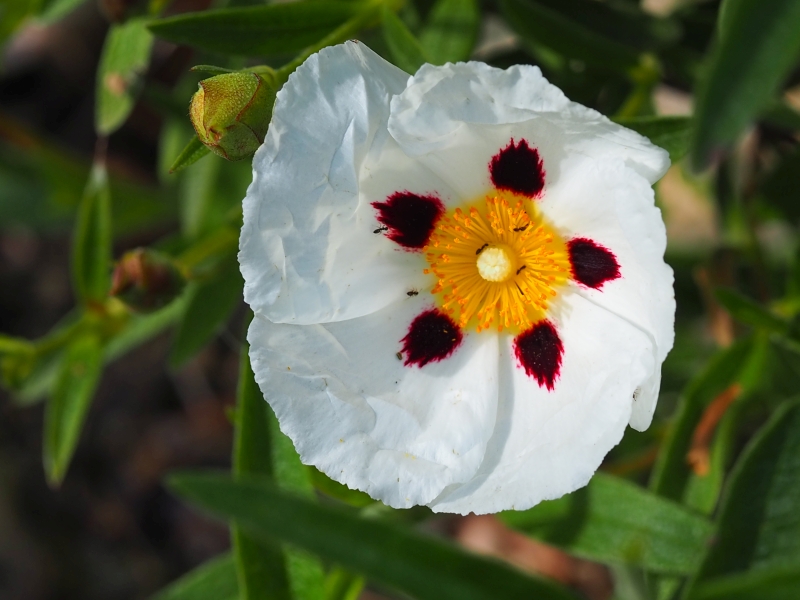
A distinctive cistus that is meant to be native to southern Europe, but I have never seen it wild around here, is Cistus ladanifer. It is easy to recognise as it has sticky leaf buds and the flowers bear five dark ‘blotches’ at the base of the petals. This is a tall and slightly limp shrub but its hybrids are some of the nicest – in my opinion – cistus available.
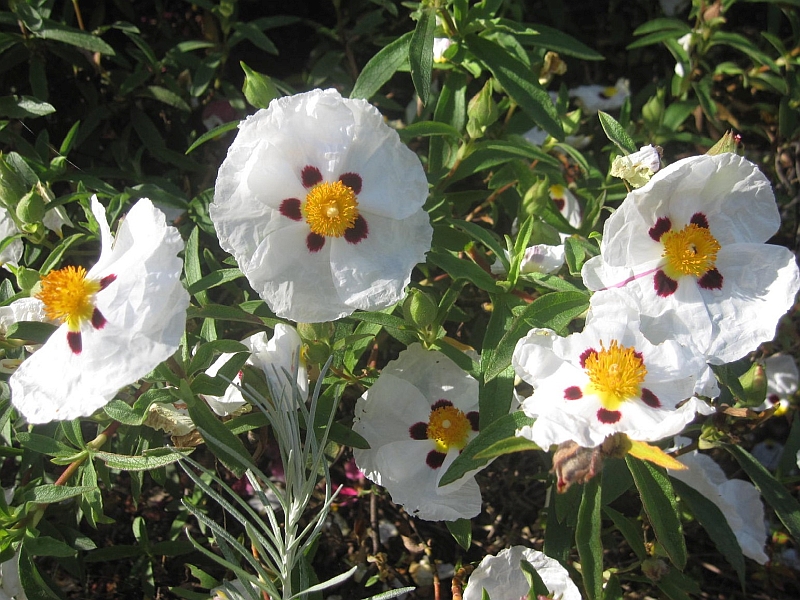
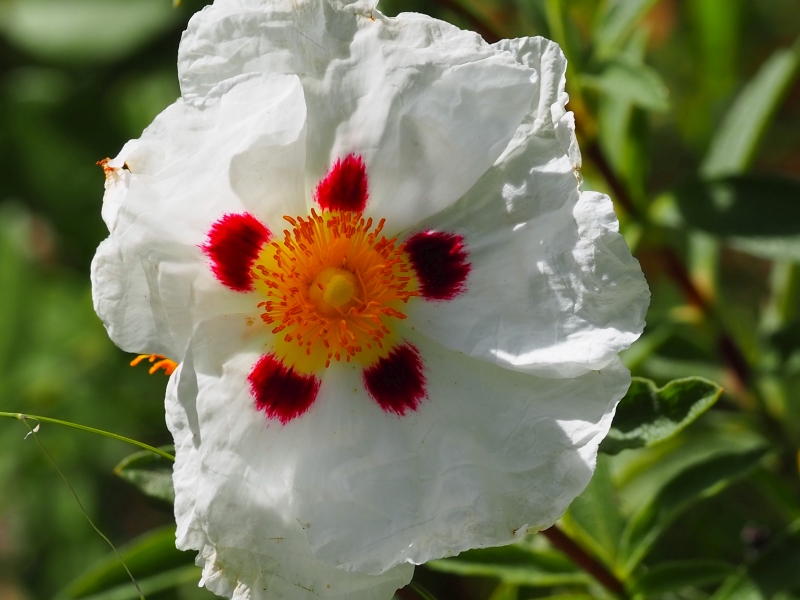
Two hybrids with white blotched flowers that are similar and both with good resistance to cold and drought are Cistus x verguinii 'Paul Pècherat' (hybrid of C. ladanifer and C. salvifolius) which forms a regular dome of around 1m, and Cistus x purpureus 'Alan Fradd' which is a little taller. Both of these have ‘alelopathic’ tendencies that stop other plants growing near them.
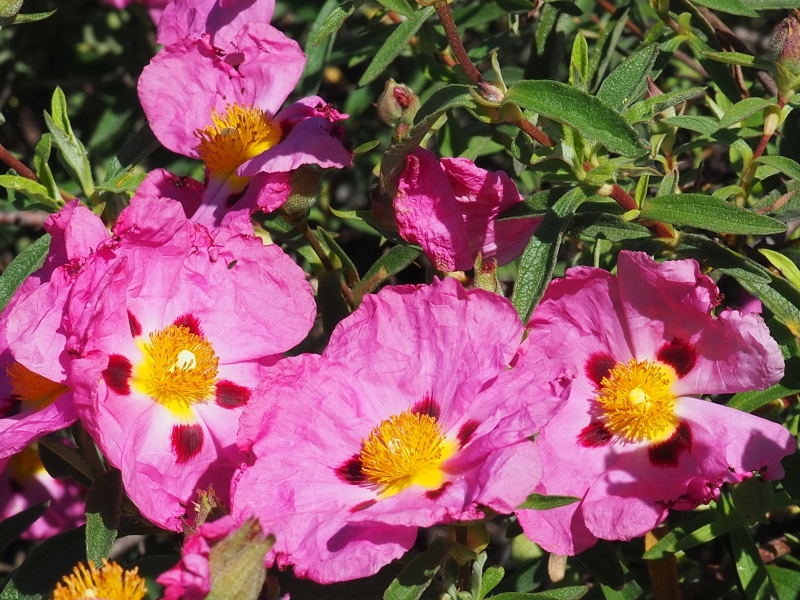
Perhaps my favourite of all cistus, Cistus x purpureus is the intense pink flowered parent of ‘Alan Fradd’, similar in all other respects.
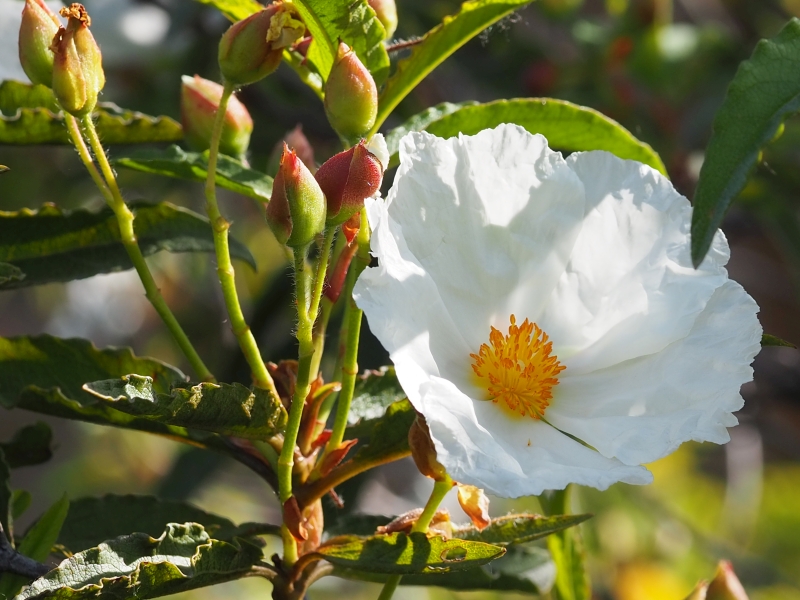
A hybrid of Cistus ladanifer that does not have the botched flowers but is very tall and has sticky buds is Cistus x aguilari. It is a most impressive shrub in full bloom but I find it can be short-lived.
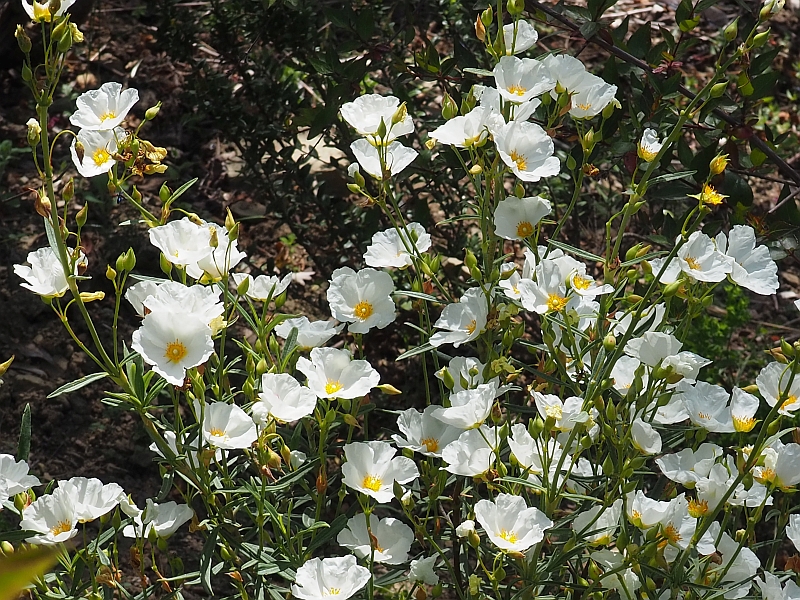
Another species from the western Mediterranean, Cistus libanotis is quite tall (up to 1.25m) and not spreading, distinctive for its narrow dark leaves. The white flowers are quite prolific.
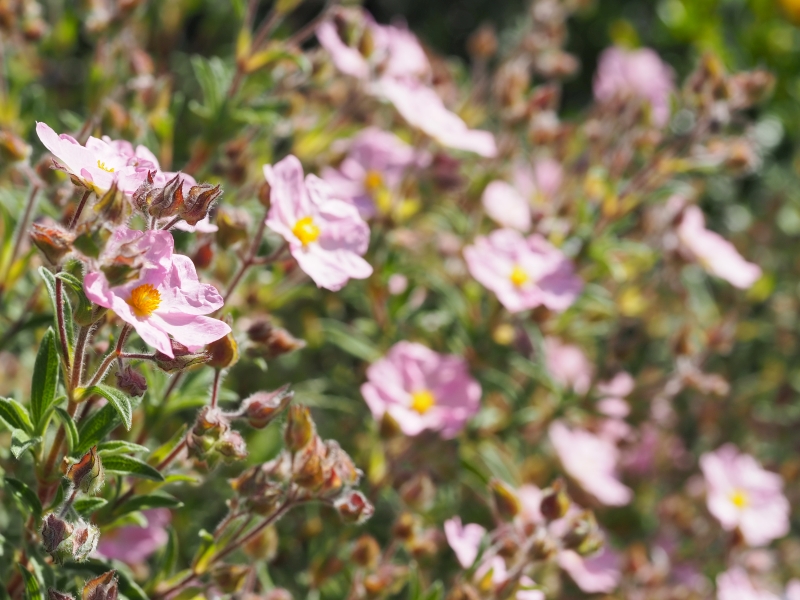
A delicate cistus which hails from different parentage (C. monspeliensis), this cistus does not grow too tall (up to 80cm) but spreads quite a bit so as to fill the border with a lighter tone when in bloom.
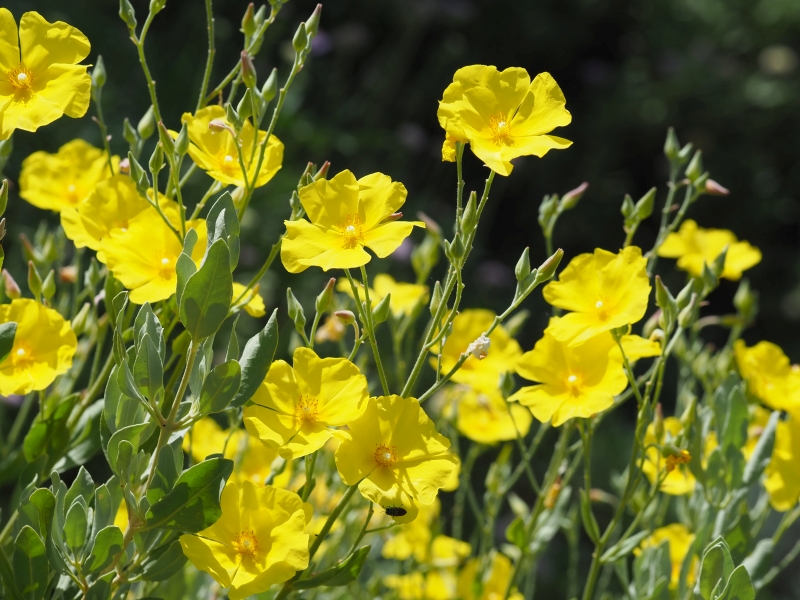
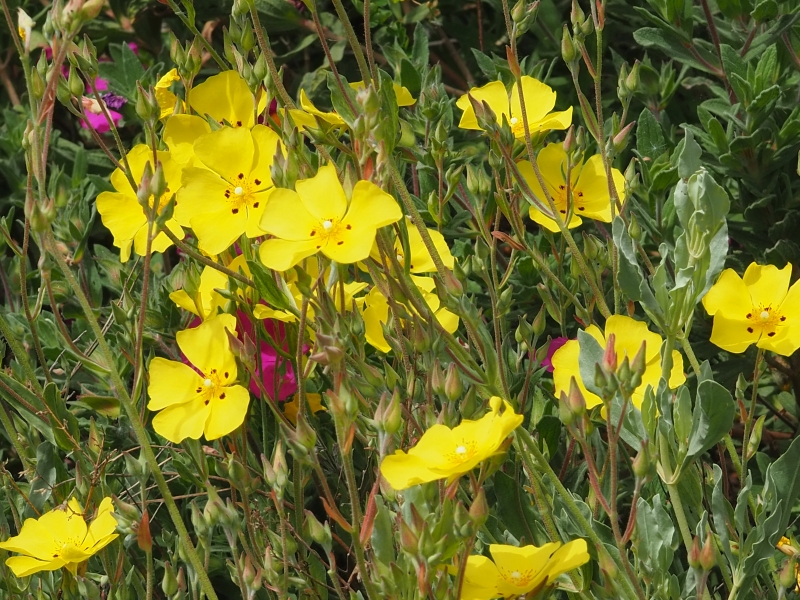
And finally, I know how much you all like the colour yellow: here is a family of yellow cistus which originates from Morocco and southern Spain. Cistus atriplicifolius has elegant long, wavy-edged silver leaves and luminous flowers. It’s hybrid has blotched flowers and blooms a couple of weeks later.
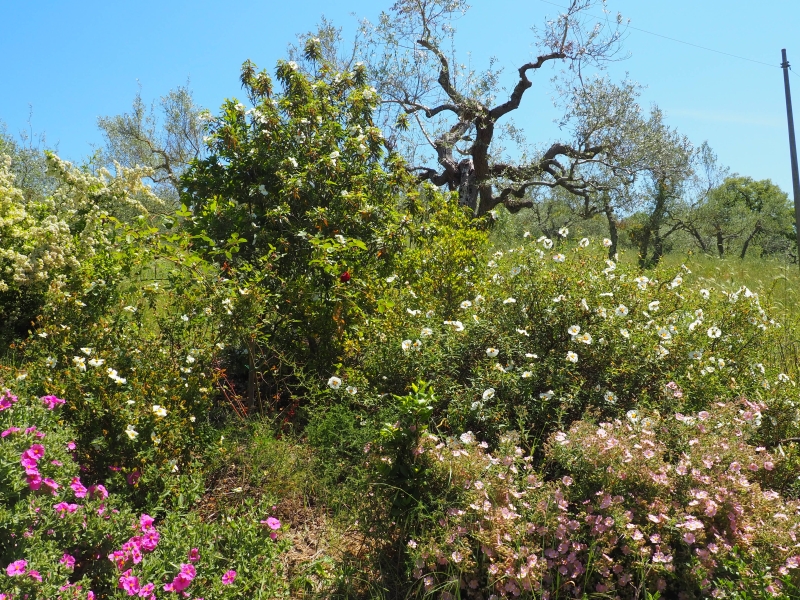
The photo at the top of this page shows Cistus albidus blooming in May
Many of these articles first appeared in the Castiglione del Lago monthly newsletter “Qua e là” edited by Priscilla Worsley
All text and photographs © Yvonne Barton unless stated otherwise